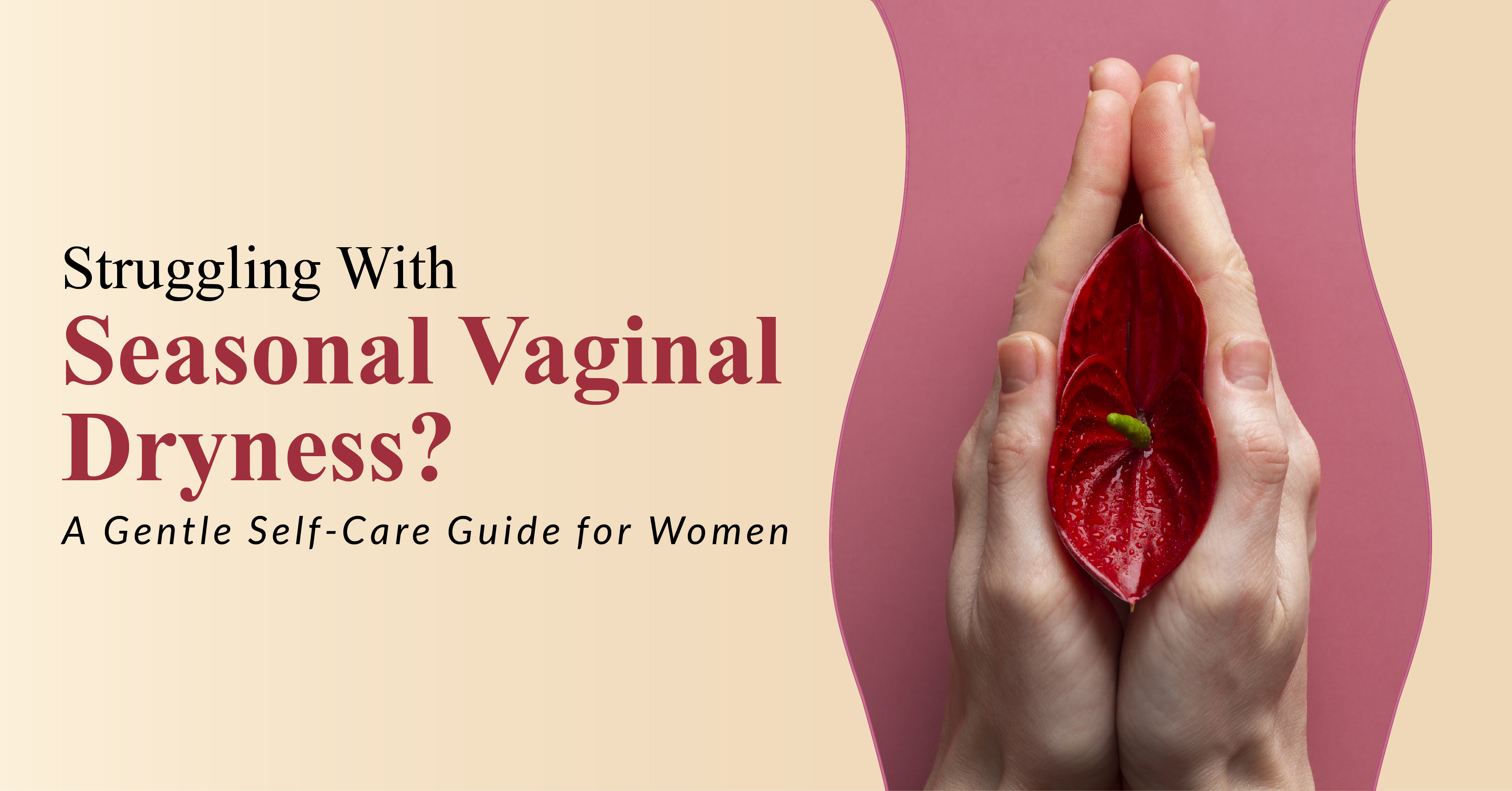
Seasonal vaginal dryness is a temporary reduction in natural vaginal moisture caused by weather changes, hydration levels, stress, or hormonal fluctuations. It matters because dryness can lead to irritation, discomfort during daily activities, and pain during intimacy. With gentle self-care practices and the right intimate support, most women can regain comfort without medical intervention. This guide is designed for women experiencing dryness during seasonal transitions who want safe, practical, and non-invasive solutions.
What Is Seasonal Vaginal Dryness?
Seasonal vaginal dryness refers to reduced natural lubrication in the vaginal tissues that occurs during specific times of the year. While vaginal dryness is often associated with menopause, many women experience it temporarily due to external factors such as cold weather, heat, dehydration, or lifestyle changes.
During seasonal transitions, the body adapts to changes in temperature, humidity, and routine. These adjustments can affect skin hydration throughout the body, including intimate areas. Vaginal tissues are sensitive and rely on a delicate balance of moisture and hormones to remain comfortable and elastic.
Why Weather Changes Affect Vaginal Moisture
Weather plays a larger role in vaginal health than many women realize. In colder months, low humidity and indoor heating can dry out skin and mucous membranes. Women may also drink less water during winter, leading to dehydration that directly impacts vaginal moisture.
In hotter seasons, excessive sweating, increased physical activity, and frequent washing may disrupt the natural vaginal environment. Stress, irregular sleep, and dietary changes during seasonal shifts can also influence estrogen levels, which are essential for maintaining vaginal lubrication and tissue health.
Understanding these triggers helps normalize seasonal vaginal dryness and reduces unnecessary worry.
Symptoms of Vaginal Dryness You Should Notice Early
Vaginal dryness often develops gradually. Paying attention to early signs can prevent prolonged discomfort.
Common symptoms include:
- A dry or tight sensation in the vaginal area
- Mild itching or burning without infection
- Discomfort during intimacy or tampon use
- Increased sensitivity or irritation after long periods of sitting
- Light spotting after intercourse due to fragile vaginal tissue
These symptoms may intensify during specific seasons and ease at other times, which is a key indicator that the dryness is seasonal rather than chronic.
Gentle Daily Self-Care for Vaginal Comfort
Supporting vaginal moisture begins with simple, consistent habits that protect the body’s natural balance.
Maintain Proper Hydration
Drinking enough water helps keep mucous membranes healthy. Adequate hydration supports natural vaginal lubrication and reduces dryness-related irritation.
Use Mild Intimate Hygiene
Avoid scented soaps, harsh cleansers, and excessive washing. Over-cleansing can strip natural oils and worsen dryness. Gentle, pH-balanced intimate care is best when needed.
Choose Breathable Clothing
Cotton underwear and loose-fitting clothes reduce friction and irritation. Synthetic fabrics can trap moisture or heat, making dryness and sensitivity worse.
Support Hormonal Balance
Managing stress, improving sleep quality, and eating a balanced diet with healthy fats can positively influence hormone levels and vaginal comfort.
The Role of Intimate Lubricants in Dryness Relief
Lifestyle changes alone may not always provide immediate relief from seasonal vaginal dryness. In such cases, using a vaginal lubricant for dryness relief can help restore comfort quickly and safely.
A high-quality intimate lubricant for women supplements natural moisture, reducing friction during daily activities and intimacy. Water-based formulations are especially suitable for regular use because they are lightweight, non-sticky, and easy to wash off.
For women experiencing recurring dryness during seasonal changes, a vaginal dryness relief gel can help protect sensitive tissues from irritation and micro-tears. Many women also use a gentle vaginal lubricant to maintain comfort even outside of intimacy.
Using a lubricant gel for intimate dryness during weather transitions can help women feel more comfortable and confident without disrupting natural balance.
When Vaginal Dryness Needs Medical Attention
Seasonal vaginal dryness is usually manageable with self-care and supportive products. However, medical advice is recommended if dryness is persistent, severe, or accompanied by unusual discharge, strong odor, bleeding, or ongoing pain.
Women who experience dryness alongside irregular periods, postpartum changes, or suspected hormonal issues should consult a healthcare professional. A proper evaluation ensures that infections, hormonal imbalances, or other conditions are ruled out.
Frequently Asked Questions
Is seasonal vaginal dryness normal?
Yes. Seasonal vaginal dryness is common and often linked to weather changes, hydration levels, and lifestyle factors. It usually improves with proper care.
Can younger women experience vaginal dryness?
Yes. Vaginal dryness can affect women of all ages, especially during stress, dehydration, or seasonal transitions.
How often can I use an intimate lubricant?
Most water-based vaginal lubricants are safe for regular use. Using them as needed helps maintain comfort without causing dependency.
How long does it take to see improvement?
Some women feel relief immediately after using a vaginal lubricant, while overall comfort may improve over a few weeks with consistent self-care.
Final Takeaway
Seasonal vaginal dryness is a common and manageable condition that many women experience during weather changes or lifestyle shifts. Reduced humidity, dehydration, stress, and hormonal fluctuations can all affect vaginal moisture. Gentle daily habits combined with the use of a vaginal lubricant for seasonal dryness can restore comfort, protect sensitive tissues, and improve intimate well-being. With the right approach, women can navigate seasonal changes comfortably and confidently.
Feb 05, 2026