Vaginal dryness is one of the most overlooked challenges couples face when trying to conceive (TTC). Research shows that 46% of reproductive-age women experience vaginal dryness, and when the emotional stress of trying to get pregnant kicks in, that number jumps even higher - up to 76% experience increased dryness episodes.
Unfortunately, most couples don’t realize one crucial fact:
Regular Vaginal lubricant gel can reduce sperm motility by up to 49% in just ten minutes.
This means that while lubricants may help with comfort, they may silently work against conception.
But there’s good news.
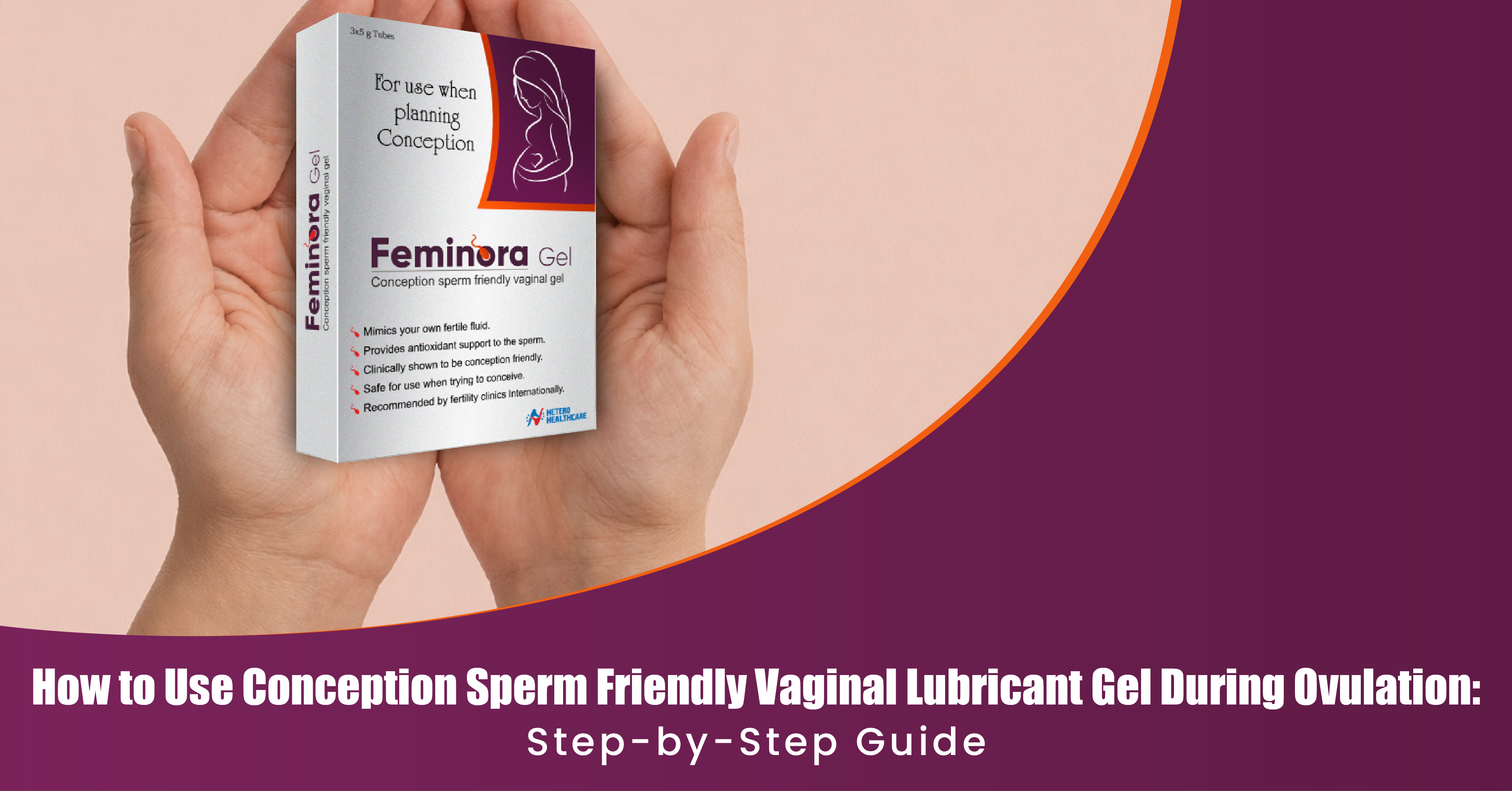
Fertility-friendly, sperm-safe lubricants - such as Feminora Gel designed specifically to support, not sabotage, your chances of pregnancy.
These lubricants mimic natural fertile cervical mucus, create a pH environment where sperm can survive, and allow uninterrupted forward movement.
This guide breaks down:
- what makes a lubricant “fertility friendly”
- how lubricants interact with sperm
- how to use conception gel correctly during ovulation
- mistakes to avoid
- how to choose the right trying to conceive (TTC) -safe lubricant
- FAQs from real trying to conceive (TTC) couples
All written in a simple, conversational style to support you on your conception journey.
Understanding Sperm-Friendly Lubricants
Not all lubricants are created equally. In fact, most standard lubricants are actively harmful to sperm because they:
- slow down motility
- dehydrate sperm cells
- alter pH levels
- create a sticky barrier sperm cannot swim through
A sperm-friendly lubricant, however, does the opposite - it creates a supportive environment for fertilization.
What Makes a Lubricant "Fertility-Friendly"?
Fertility-friendly lubricant gel are specifically formulated to mimic fertile cervical mucus. The gold-standard ingredient used is hydroxyethylcellulose, which resembles the consistency of natural ovulatory mucus.
A true trying to conceive (TTC)-safe lubricant:
- Is water-based
All FDA-cleared fertility lubricants fall into this category. - Avoids harmful ingredients
An effective trying to conceive (TTC) lubricant contains no glycerin, parabens, silicones, propylene glycol, or petroleum-based ingredients. - Maintains sperm-safe pH
Ideal pH: 7.0-8.5, matching semen and fertile cervical mucus. - Is isotonic
Isotonic lubricants prevent sperm dehydration and allow normal forward progression. - Is clinically tested for sperm safety
Products like Feminora Gel, undergo sperm survival and motility tests.
In short:
Fertility-friendly lubricants don’t boost fertility - they simply don’t harm sperm, unlike regular lubricants.
How pH and Osmolality Affect Sperm
Two scientific concepts matter most when choosing a lubricant:
1. pH Level
Sperm function optimally at pH 6.9-7.4.
Most regular lubricants have a vaginal pH of 3.8-4.5, which is too acidic for sperm.
Acidic environments can:
- reduce sperm motility
- damage sperm membranes
- decrease chances of reaching the egg
2. Osmolality
Sperm thrive in solutions with osmolality between 270-360 mOsm/kg.
Lubricants outside this range can:
- shrink or swell sperm cells
- slow the forward progression
- cause membrane damage
This is why FDA-cleared conception gels maintain sperm-friendly osmolality.
Common Myths About Fertility Lubricants - Debunked
Myth 1: You must use a fertility lubricant to get pregnant.
Not true But if dryness exists, a sperm-safe lubricant is far better than standard lubes.
Myth 2: Fertility lubricants increase your chances of pregnancy.
They don’t increase fertility, but they don’t reduce it, which is already a big advantage.
Myth 3: Natural or organic lubricants are automatically sperm safe.
“Natural” does not mean sperm compatible. The FDA does not test them.
Myth 4: Coconut oil is a safe alternative.
Coconut oil is not sperm-friendly and reduces sperm motility.
How Lubricants Interact with Sperm
Most commercially available lubricants negatively impact sperm through:
Osmolarity imbalance
If the lubricant is too concentrated or too diluted, the sperm becomes dehydrated or swollen, reducing motility.
Sperm-toxic ingredients
Glycerin disrupts sperm metabolism and movement.
pH mismatch
Acidic lubricants damage sperm membranes.
However - real-life TTC outcomes tell a different story
A study on nearly 300 women showed that lubricant users were no less likely to conceive than non-users.
Why?
- Sperm deposited near the cervix quickly move upward
- Not all lube enters the upper vaginal canal
- Comfortable intercourse often means more frequent intercourse, which boosts chances
So, while lab data shows negative effects, real-life outcomes remain hopeful when using fertility-friendly gels.
Does Coconut Oil Kill Sperm?
A common misconception is that coconut oil is safe for TTC.
But studies show:
- Coconut oil is not sperm-safe
- Olive oil reduces sperm motility by 42% in 15 minutes
- Baby oil & canola oil perform slightly better but are still not recommended
If TTC, avoid oil-based lubricants completely.
How to Use Sperm-Friendly Lubricant During Ovulation (Step-by-Step Guide)
Correct applications make a big difference.
Here’s how to use conception gel effectively:
Step 1: Identify Your Fertile Window
Your fertile period includes:
- 5 days before ovulation
- the day of ovulation
- 24 hours after ovulation
Track ovulation using:
- cervical mucus observations
- ovulation predictor kits (LH surge)
- cycle tracking apps
- basal body temperature
Using the gel outside your fertile window is safe, but not useful for conception.
Step 2: Wash Hands and Prepare the Applicator
Clean hands = fewer disruptions to the vaginal environment.
Most sperm-friendly lubricants provide sterile, single-use applicators.
If using Feminora Gel or similar products:
- hold the applicator with the narrow end up
- twist off the tab
- ensure no air bubbles
Step 3: Apply the Correct Amount of Gel
Most trying to conceive (TTC)-safe lubricants recommend 1-4 grams, depending on dryness levels.
Too much lubricant may slow sperm movement.
Step 4: Apply Internally 10-15 Minutes Before Intercourse
For best results:
- gently insert the applicator 2-3 cm into the vagina
- release the gel
- allow it to disperse naturally
External lubrication can be applied right before intercourse.
Step 5: Tips for Maximum Comfort & Conception Support
- Apply both internally and externally if dryness is severe
- Use only during the fertile window
- Follow the product’s instructions
- Combine with other trying to conceive (TTC) methods (timed intercourse, OPKs)
Step 6: What to Avoid After Application
- Don't use regular lubes afterward
- Avoid douching or excessive washing
- Avoid scented soaps in the vaginal area
- Don't insert anything else immediately after
- Let the gel maintain its supportive environment
Choosing the Right Sperm-Friendly Lubricant
Not all “fertility-friendly” labels are true.
Here’s how to choose wisely.
Ingredients to Avoid
Stay away from lubricants containing:
- glycerin
- parabens
- propylene glycol
- silicone
- petroleum-based ingredients
Even small amounts (2-5%) can impair sperm motility.
FDA-Approved (PEB Category) Lubricants
The FDA created the PEB category - Preconception, Embryo, Birth - to classify lubricants that are:
- sperm-safe
- embryo-safe
- conception-supportive
Feminora Gel aligns with TTC-safe formulations and offers gentle, medically informed lubrication suitable for sperm motility.
Feminora can be recommended as a gentle, pH-balanced option for couples seeking comfort and sperm safety.
Natural Alternatives - Should You Use Them?
Egg white has been historically mentioned as sperm safe.
However:
- hygiene risks
- bacterial contamination
- STI transmission risk
- inconsistent texture
Make it unsafe today.
Household oils = unreliable and often harmful.
Choose clinically tested fertility lubricants like Feminora gel instead.
Conclusion
A Small Step That Makes a Big Difference in Your trying to conceive TTC Journey
Understanding fertility-safe lubricants is one of those small but powerful decisions that support natural conception. With vaginal dryness affecting nearly half of all reproductive-age women, and stress increasing the problem for 76% of women trying to conceive, using the right lubricant is essential.
A sperm-friendly lubricant like Feminora Gel:
- maintains a sperm-compatible pH
- mirrors natural fertile cervical mucus
- avoids harmful ingredients
- supports sperm motility
- enhances comfort
- prevents the damage caused by regular lubricants
While fertility lubricants do not increase fertility, they ensure you don’t unintentionally decrease your chances - something that standard lubricants often do.
Using the right gel, applying it correctly during ovulation, and avoiding harmful alternatives can make intimacy more comfortable and conception more probable.
TTC is an emotional journey.
Choosing the right products helps remove unnecessary obstacles - so you can focus on what truly matters: building your family with love, comfort, and confidence.
Dec 24, 2025